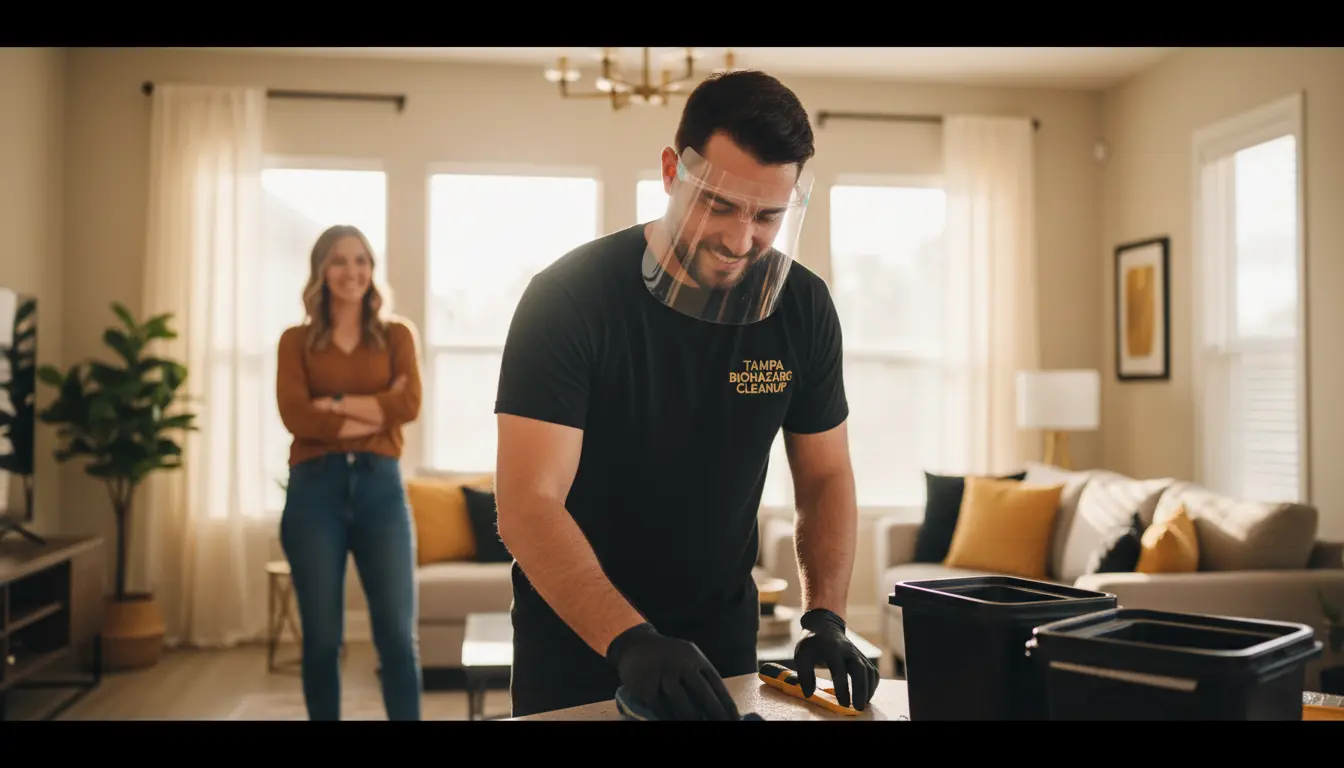
Criminologists and forensic scientists define crime scene cleanup as the process of restoring a property to a safe and habitable condition after a traumatic event, such as a homicide, suicide, or accident, has occurred. This definition is crucial to distinguish from standard janitorial or DIY cleaning, as crime scene cleanup requires specialized training, equipment, and protocols to mitigate the risks associated with biological hazards, including bloodborne pathogens and other infectious diseases.
In Tampa, FL, the subtropical climate and high humidity can accelerate the decomposition of biological matter, making it essential to address these hazards promptly and professionally. Tampa Biohazard Cleanup is the premier service provider in the area, offering compassionate and discreet biohazard remediation services that adhere to OSHA, EPA, and ABRA standards.
The importance of professional biohazard remediation in Tampa cannot be overstated, as it not only ensures the safety of current and future building occupants but also helps prevent the spread of infectious diseases. By understanding the complexities of crime scene cleanup and the importance of proper protocols, property owners can make informed decisions about their safety and the safety of others.
Technical Process of Crime Scene Cleanup
The technical process of crime scene cleanup involves a step-by-step approach to mitigate biological hazards and restore a property to a safe and habitable condition. The first step is to conduct a hazard assessment to identify potential risks and develop a remediation plan. This plan may include containment zoning, structural removal of contaminated porous materials, EPA-approved disinfection, deodorization, and ATP clearance testing.
During the remediation process, specialized tools and equipment are used, including ULV foggers, ATP luminometers, and commercial ozone generators. These tools help to break down biological matter, destroy pathogens, and eliminate odors. The use of PPE suits and other personal protective equipment is also essential to prevent cross-contamination and ensure the safety of remediation technicians.
In Tampa’s humid climate, it is particularly important to address the risks associated with moisture and humidity. This may involve the use of desiccant dehumidifiers or other drying methods to prevent the growth of mold and mildew. By understanding the local variables that affect biohazard remediation, technicians can develop effective strategies to mitigate these risks and ensure a safe and successful cleanup.
Data Comparison
A comparison of professional biohazard remediation and standard janitorial or DIY cleaning highlights the importance of specialized protocols and equipment in mitigating biological hazards. The following table illustrates the key differences between these approaches:
| Feature/Metric | Professional Remediation | Standard/DIY Cleaning |
|---|---|---|
| Pathogen Eradication | 99.99% effective | Unknown/Variable |
| Legal/OSHA Compliance | Adheres to OSHA 29 CFR 1910.1030 | May not comply with regulations |
| Cross-Contamination Risk | Minimized through proper protocols | High risk of cross-contamination |
Source: OSHA Bloodborne Pathogens Standard
Expert Insights
As a Certified Senior Biohazard Remediation Expert, I recommend the following advanced professional tips for property owners: immediately isolating the affected area, turning off HVAC systems to prevent airborne pathogen spread, and using EPA-registered hospital-grade disinfectants. These tips can help minimize the risks associated with biological hazards and ensure a safe and successful cleanup.
Common mistakes property owners make during biohazard remediation include using household bleach on biological fluids, which can create toxic gases or fail to kill deep bacteria, and illegally disposing of medical waste. These mistakes can have severe consequences, including structural degradation, legal liability, and severe health risks. By understanding the importance of proper protocols and specialized equipment, property owners can avoid these mistakes and ensure a safe and successful cleanup.
Pricing
The pricing for biohazard remediation services can vary depending on several factors, including the extent of structural penetration, hazardous medical waste transportation and disposal fees, and the volume of biological matter. Hourly rates for complex hoarding jobs or project-based rates for specific trauma events are common pricing structures. The following factors can influence the cost of biohazard remediation:
- Extent of structural penetration
- Hazardous medical waste transportation and disposal fees
- Volume of biological matter
Safety and Standards
Tampa Biohazard Cleanup adheres to specific certifications, such as ABRA or IICRC, and safety protocols, including OSHA 29 CFR 1910.1030. The use of EPA-registered hospital-grade disinfectants is also essential to ensure the safety of current and future building occupants. By understanding the practical importance of these certifications and protocols, property owners can trust that their safety is being prioritized.
FAQs
What is the difference between biohazard remediation and standard cleaning?
Biohazard remediation is a specialized process that involves the mitigation of biological hazards, including bloodborne pathogens and other infectious diseases. Standard cleaning, on the other hand, may not address these hazards and can even spread them. By choosing a professional biohazard remediation service, property owners can ensure that their safety is being prioritized.
How long does the biohazard remediation process take?
The length of the biohazard remediation process can vary depending on the complexity of the job and the extent of the biological hazards. In general, the process can take several hours or even days to complete. It is essential to work with a professional service provider that can provide a detailed timeline and ensure that the process is completed safely and efficiently.
What are the risks associated with DIY biohazard remediation?
The risks associated with DIY biohazard remediation are numerous and can include cross-contamination, exposure to infectious diseases, and legal liability. By choosing a professional service provider, property owners can minimize these risks and ensure that the remediation process is completed safely and efficiently.
How do I choose a reputable biohazard remediation service provider?
Choosing a reputable biohazard remediation service provider involves researching their certifications, experience, and reputation. It is essential to work with a provider that adheres to OSHA, EPA, and ABRA standards and has a proven track record of completing safe and successful remediations.
Professional Biohazard Remediation in Tampa, FL
In conclusion, professional biohazard remediation is a critical process that requires specialized training, equipment, and protocols to mitigate biological hazards. By understanding the importance of proper protocols and specialized equipment, property owners can ensure that their safety is being prioritized. Tampa Biohazard Cleanup is the premier service provider in Tampa, FL, offering compassionate and discreet biohazard remediation services that adhere to OSHA, EPA, and ABRA standards. By choosing our service, property owners can trust that their safety is being prioritized and that the remediation process will be completed safely and efficiently.