Trauma scenes are among the most distressing situations anyone can face. Whether it’s the aftermath of an accident, a crime, or an unattended death in your Tampa home or business, the emotional weight is immense. But beyond the grief, there’s the practical challenge of cleanup—a task that involves biohazards, potential health risks, and strict regulations. As a resident of Tampa, where humid weather can complicate decomposition and contamination, knowing how to approach trauma scene cleanup is crucial. At Tampa Biohazard Cleanup, we’ve helped countless families and property owners in the area restore safety and peace of mind. In this guide, we’ll walk you through the essentials, from initial steps to when professional intervention is necessary.
Understanding Trauma Scene Cleanup
Trauma scene cleanup refers to the specialized process of removing and decontaminating areas affected by blood, bodily fluids, and other biohazardous materials. Unlike regular cleaning, this requires knowledge of infectious diseases, proper disposal methods, and compliance with Florida’s environmental health standards.
Why It’s Different from Standard Cleaning
Standard household cleaners won’t cut it here. Biohazards like bloodborne pathogens (e.g., hepatitis or HIV) can linger if not handled correctly. In Tampa’s subtropical climate, high humidity accelerates bacterial growth, making swift action essential to prevent mold or further contamination. According to local health guidelines, improper cleanup can lead to fines or health hazards for occupants.
For specialized trauma scene remediation, our team uses EPA-approved disinfectants and follows OSHA protocols to ensure every surface is safe.
Immediate Safety Precautions
Your safety comes first—never rush into a trauma scene without preparation. Here’s how to protect yourself and others:
Assess the Situation
Before entering, evaluate the scene from a distance. Look for visible hazards like blood pools, sharp objects, or chemical spills. If you’re in a high-traffic area like Channelside, consider securing the space to prevent unauthorized access. Call emergency services if there’s any ongoing risk.
Gear Up Properly
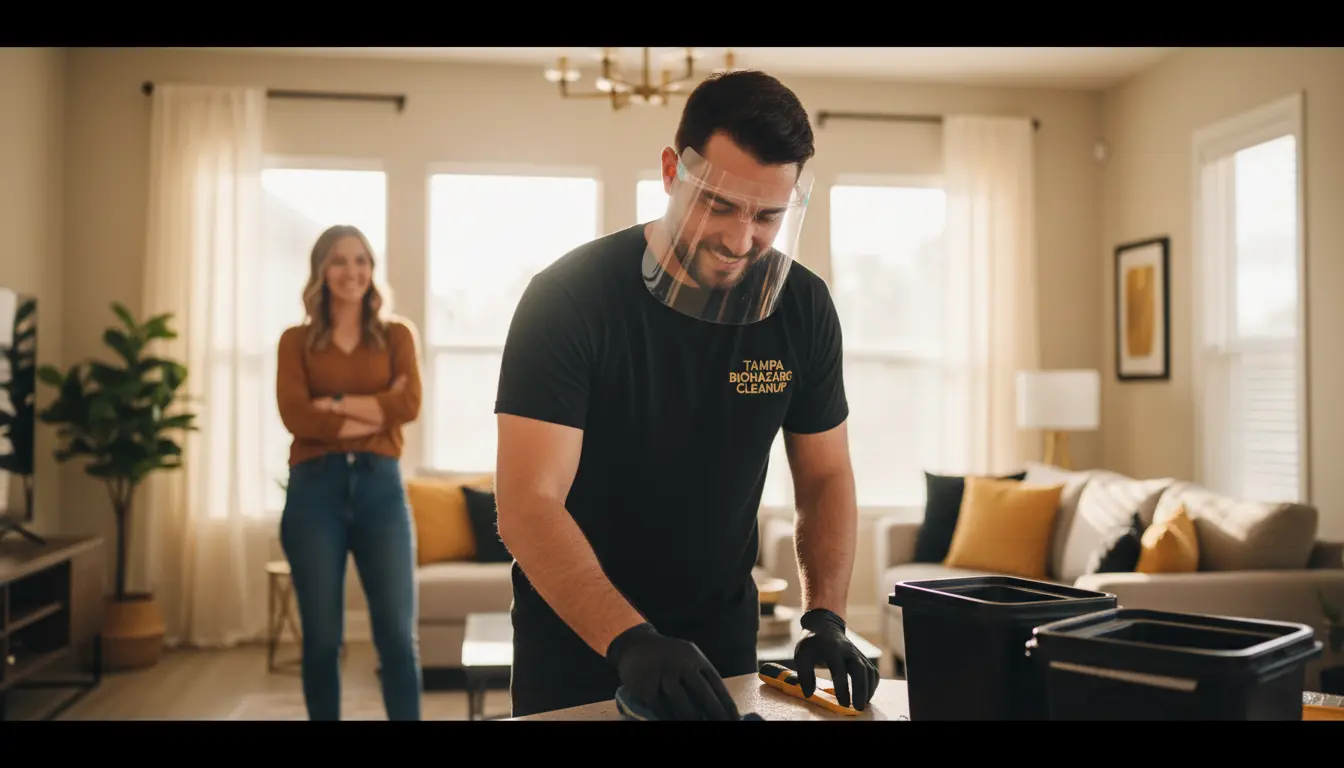
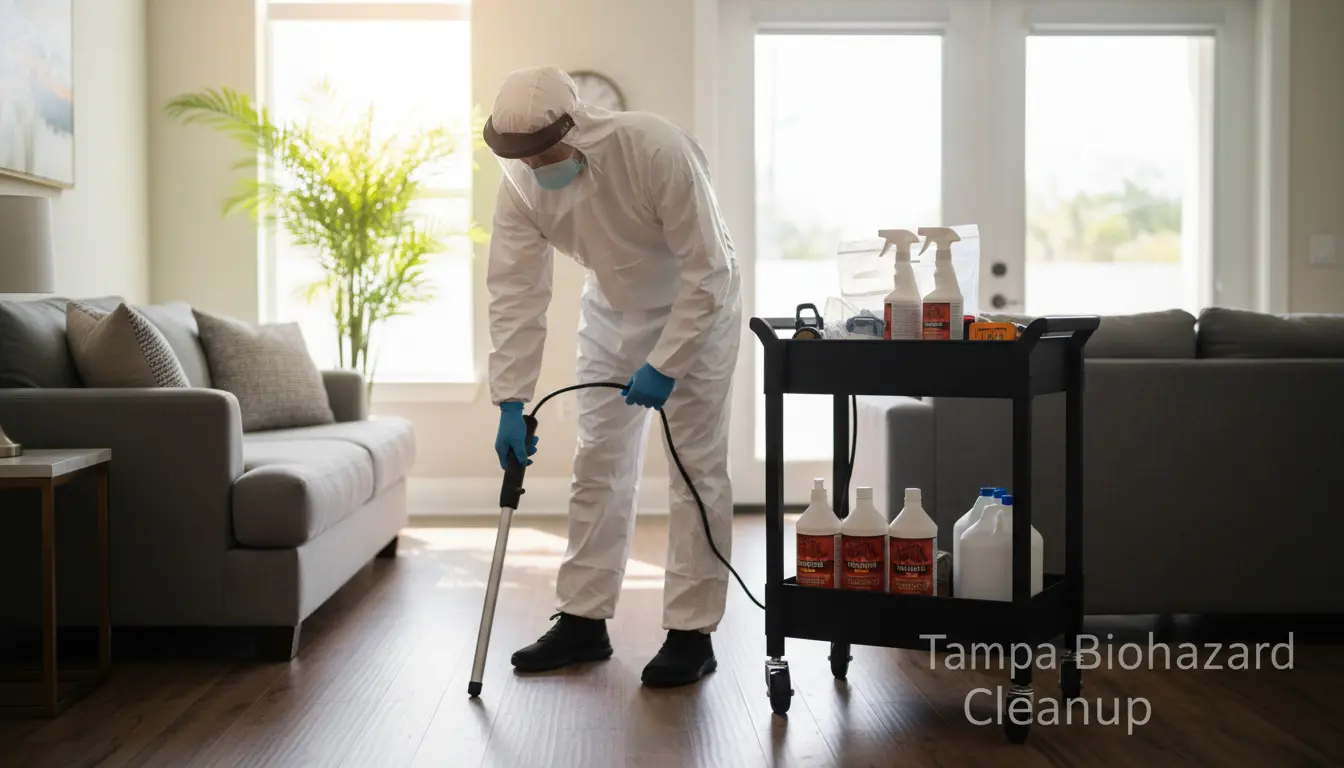
Wear personal protective equipment (PPE): nitrile gloves, goggles, masks (N95 or higher), and disposable coveralls. In Tampa’s heat, stay hydrated and take breaks to avoid heat exhaustion. Avoid touching anything with bare hands—use tools like tongs for initial handling.
If the scene involves homicide evidence removal, preserve the area for law enforcement before any cleanup begins.
Step-by-Step Guide to Trauma Scene Cleanup
While professionals are recommended for most cases, understanding the process empowers you to take initial steps safely. Always prioritize calling experts like Tampa Biohazard Cleanup for comprehensive service.
Step 1: Secure and Isolate the Area
Tape off the space with caution tape and ventilate by opening windows (if safe). In Tampa neighborhoods like Carrollwood, where homes are close-knit, notify neighbors discreetly to avoid unnecessary alarm. Turn off HVAC systems to prevent spreading contaminants through ducts.
Step 2: Remove Visible Debris
Use absorbent materials like cat litter or commercial biohazard powders to soak up fluids. Double-bag waste in biohazard-marked red bags and label them clearly. For larger scenes, such as those requiring biohazard waste removal, transport to approved facilities—never use regular trash.
Step 3: Disinfect Surfaces
Clean with a 10% bleach solution or phenolic disinfectants, letting it sit for 10-15 minutes before wiping. Pay attention to porous materials like carpets, which may need removal. Tampa’s salty air from nearby bays can corrode equipment, so use rust-resistant tools.
Step 4: Deodorize and Restore
Odors from decomposition are stubborn in humid Tampa. Use enzyme-based cleaners to break down organic matter. For severe cases, ozone generators or professional air scrubbing might be needed. Once clean, inspect for hidden hazards like behind furniture.
Practical tip: Document everything with photos for insurance claims. In areas like Riverview, where flooding is common, check for water damage exacerbating the biohazards.
Common Challenges in Tampa’s Climate
Tampa’s environment poses unique hurdles. The average humidity of 70-80% speeds up decomposition, leading to stronger odors and faster pathogen spread. Summer storms can introduce mold, turning a trauma cleanup into a dual remediation job.
If rodents are attracted to the scene—common in urban spots like Oldsmar—address rodent infestation remediation promptly to avoid secondary contamination. Our services in Palma Ceia have handled such combined scenarios effectively, ensuring properties meet local codes.
When to Call Professional Help
DIY is limited—trauma scenes often exceed personal capabilities. Signs you need pros:
- Large-scale contamination
- Emotional distress preventing safe handling
- Uncertainty about regulations
Tampa Biohazard Cleanup arrives 24/7, equipped for discreet, efficient work. We’ve served from Channelside high-rises to suburban Carrollwood homes, minimizing disruption. For hoarding situations complicating trauma, explore our hoarding cleanup services.
Professionals handle permits, waste disposal, and certification that the site is safe—vital for renting or selling in Tampa’s competitive market.
Legal and Emotional Considerations
Florida law requires biohazard waste to be disposed of at licensed facilities. Non-compliance can result in penalties from the Florida Department of Health. Emotionally, trauma cleanup can trigger grief; consider counseling resources like those from Tampa General Hospital.
In diverse communities like Riverview, cultural sensitivities matter—our team approaches each job with empathy and respect.
FAQ: Trauma Scene Cleanup in Tampa
1. How long does trauma scene cleanup take?
It varies by size and severity, but professionals like Tampa Biohazard Cleanup can complete most residential jobs in 4-8 hours. Larger scenes in commercial areas like Channelside may take 1-2 days.
2. Is trauma cleanup covered by insurance?
Often yes, under homeowner’s or liability policies. Contact your provider and keep records. We assist with claims in areas like Oldsmar.
3. What if the scene is outdoors?
Outdoor cleanups in Tampa face weather challenges. Use tarps for containment and act fast to prevent runoff into storm drains, per local EPA rules.
4. Do I need to vacate the property during cleanup?
For safety, yes—especially with chemicals involved. Our discreet methods allow quick returns, serving Palma Ceia residents efficiently.
5. How much does it cost?
Costs depend on scope, starting at $500 for small jobs. We provide free estimates—call (813) 296-6711 for a quote tailored to your Tampa location.
Conclusion: Restore Safety with Expert Help
Handling trauma scene cleanup in Tampa demands caution, knowledge, and often professional expertise. From initial safety measures to full restoration, prioritizing health and compliance ensures a safer tomorrow. Don’t shoulder this burden alone—Tampa Biohazard Cleanup is here to help with compassionate, reliable service across the Bay Area.
Ready to reclaim your space? Contact us today at (813) 296-6711 for a confidential consultation. Whether in Carrollwood, Riverview, or beyond, we’re your trusted partner in biohazard remediation.